
KIDMORE VINEYARD
HARVEST
The best time of the year, the fruit of all our labour comes to a finish and the joy of winemaking begins.
2022
The season started as ever, with pruning in February and tying down in March. It was a relatively frost free spring and so little damage occurred during bud burst. We had very good flowering in June and then one of the hottest summers on record, 42 degrees was recorded. Although warmth is perfect, so is a little rain and there was none. Due to the lack of rain and 4 year old vines our yields were low across the varieties but the quality was beginning to look amazing. Rain finally arrived just in time and we harvested between the 22nd and 28th of September.
Good sugar levels, good acids…high quality juice. A very exciting first harvest for Kidmore.

2023
What a year! Only a few spring frosts which is always a relief. Perfect warm weather for the flowering in June but then a really wet and cold July and August. September was our saviour as we recorded one of the hottest months on record., this saved the harvest quality although the sugar levels were still a tad low. Disease was a bit more prevalent than other years, Botrytis due to the damp weather. The real positive for the English vineyard industry were the huge yields, bigger even than 2018. We green harvested about a third of our bunches to give the remaining grapes a better chance of quality. We still yielded 8 tonnes per hectare and we harvested later between the 9th and 16th of October.
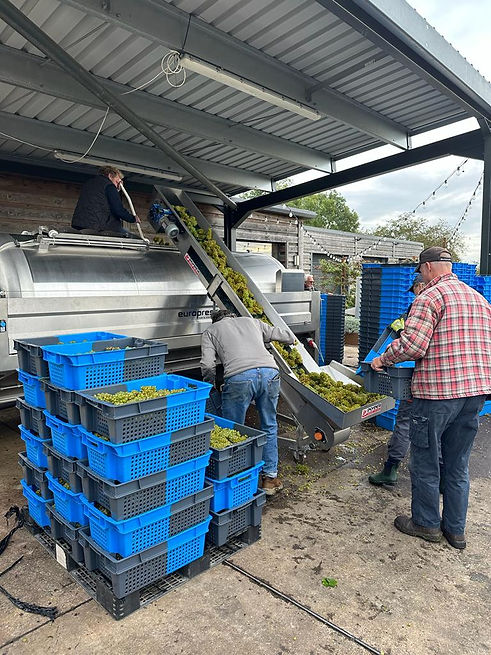
2024
The 2024 growing season in the UK was undoubtedly challenging, yet the perseverance and meticulous attention to selective harvesting have culminated in a highly satisfying outcome. The season commenced with persistent wet conditions that continued through to harvest, adversely affecting flowering. Nonetheless, a timely warm spell towards the end of June provided a much-needed boost, although the total effective growing days remained significantly below average.
Compounding the difficulties were increased incidences of disease and a notable rise in bird damage, more so than in previous years. These factors, combined with a rigorous focus on quality, resulted in yields being approximately 40% lower than usual. The elevated acidity levels, ideal for sparkling wines, will benefit from undergoing malolactic fermentation to achieve the desired finish.
In summary, despite the tougher conditions of the growing season, there is a palpable sense of anticipation for the evolving character of the wines over the forthcoming years.
Note the autumnal colours due to the harvest on October 23rd.
